
A name from the internet is only a starting point
You feel a small lump while getting dressed. It does not hurt. Someone says it is probably a lipoma. Another person calls it a cyst. It is easy to jump straight to the question of removal.
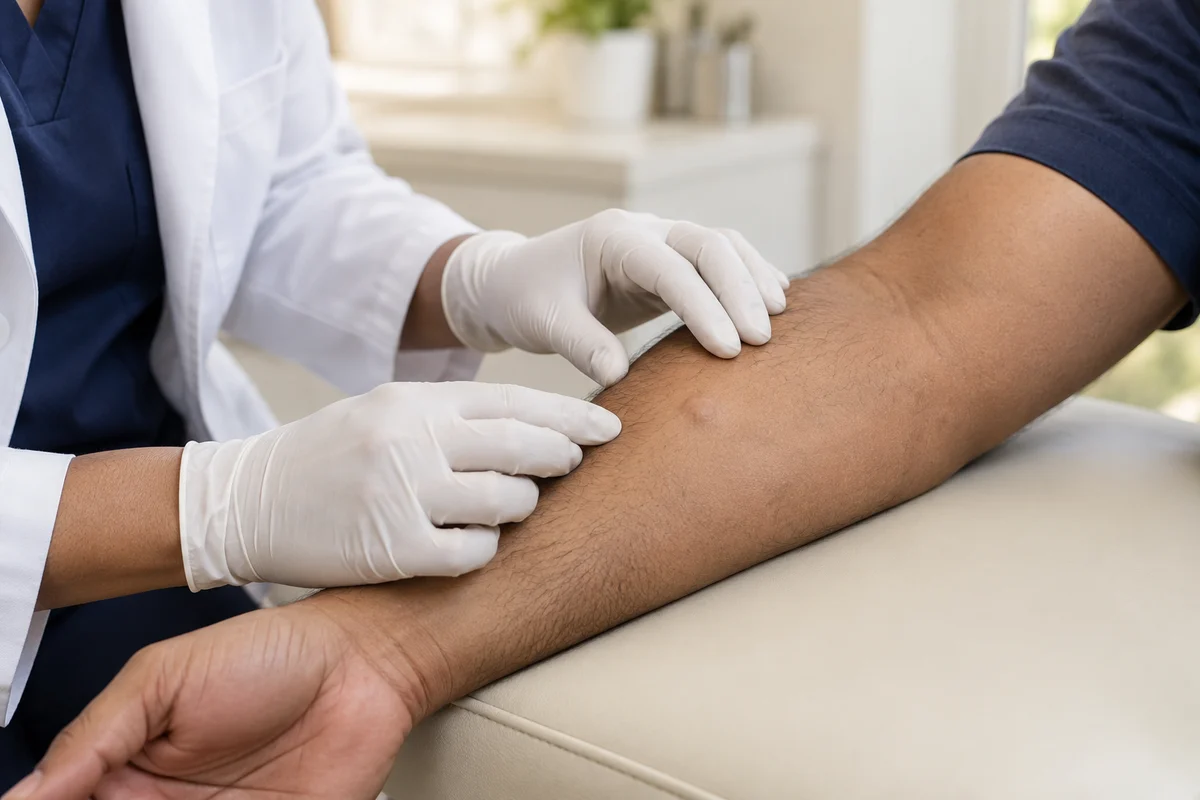
The first useful step is an examination. Different lumps can look or feel similar, and the treatment depends on what the lump actually is.
What is the difference?
A lipoma is a growth of fatty tissue. A skin cyst is a sac beneath the skin, often containing material such as keratin. Both can be benign. A clinician considers their position, feel, growth, and other features before making a diagnosis.
Some lumps need a scan or further investigation. A deep, fixed, unusual, or rapidly growing lump should not be treated as a routine cosmetic concern without assessment.
Note what has changed
Before your visit, think about when you first noticed it. Has it grown? Does it hurt? Has there been redness or discharge? Has it been removed or drained before? You do not need to keep pressing it to check.
If the skin becomes increasingly red or painful, or you develop fever, seek prompt medical care. Avoid squeezing or trying to drain the lump at home.
Removal is a decision, not an automatic next step
A confirmed lipoma or cyst that causes no problems may be left alone. Removal may be considered for symptoms, repeated inflammation, growth, uncertainty, or personal preference after discussing the trade-offs.
Ask about the likely scar, anaesthetic, wound care, and whether the tissue will be examined in a laboratory. If a cyst is inflamed, the first visit may focus on that problem before planned removal.
Bring the questions that matter to you
Tell your surgeon if the lump catches on clothing, hurts at work, or has become difficult to ignore. Ask whether further tests are needed and what observation would involve.
The aim is a clear diagnosis and a considered plan. It is reasonable to ask for time to understand both.
Sources & further reading
Educational information based on the sources below. This guide does not replace a personal clinical assessment.
Our editorial process. Educational information, not a personal diagnosis.