What you should know
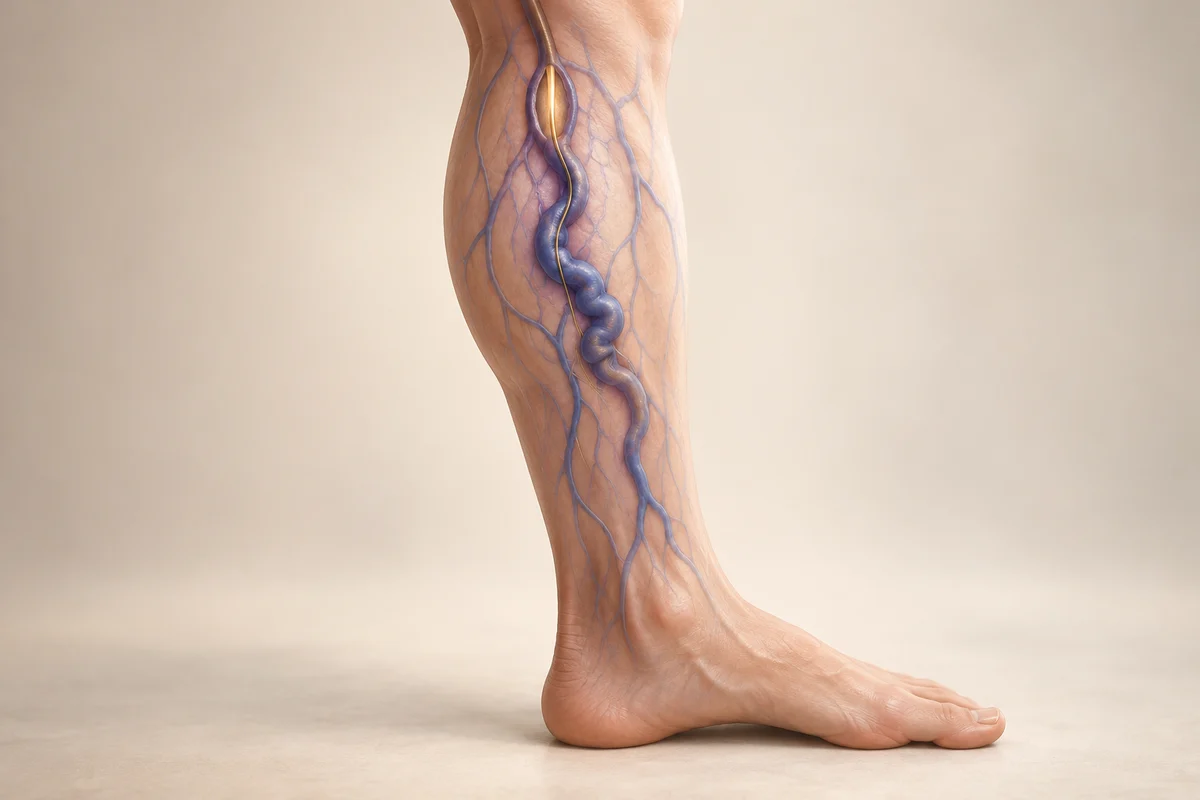
Endovenous laser treatment, or EVLT, uses heat delivered inside a faulty superficial vein to close it. Blood then flows through other functioning veins. A duplex ultrasound helps identify the pattern of reflux and plan treatment.
A vein scan helps turn visible symptoms into a considered treatment plan.
Symptoms worth discussing
- Prominent, twisted veins visible beneath the skin
- Aching or heavy legs, especially after standing
- Swelling around the ankle or itching over a vein
- Skin colour changes, eczema, or an ulcer around the lower leg
A diagnosis before a decision
A specialist examines your legs and arranges a duplex ultrasound when indicated. They ask about previous clots, pregnancy, medicines, previous vein treatment, and ulcers. Leg swelling has several causes, so visible veins alone do not establish the whole diagnosis.
Bring previous reports, a list of medicines and allergies, and any relevant operation notes. Tell your clinician about blood thinners, diabetes medicines, and previous anaesthetic problems. Do not stop medicines without advice.
Understanding your options
Conservative care
Walking, movement breaks, and leg elevation can help some symptoms. Compression should be appropriately assessed and prescribed, especially if arterial circulation is a concern.
Endovenous laser treatment
For suitable refluxing veins, ultrasound guides a laser fibre into position. Local anaesthetic is placed around the vein before controlled heat closes it.
Other vein treatments
Radiofrequency ablation, foam sclerotherapy, and surgery are alternatives in selected cases. Small surface veins may need additional treatment after the main refluxing vein is addressed.
What treatment can involve
Using ultrasound guidance, the specialist accesses the selected vein through a small entry point, introduces the fibre, and places protective local anaesthesia around it. Laser energy is delivered as the fibre is withdrawn. Walking, compression if prescribed, and follow-up instructions are explained before discharge.
Your treating team should explain preparation, fasting when needed, anaesthesia, consent, hospital stay, and who will be available if you have concerns after discharge.
Recovery at your pace
Walking is often encouraged, while prolonged inactivity should be avoided as advised. Bruising or a pulling sensation can occur. Compression duration, return to work, travel, exercise, and follow-up ultrasound are individual decisions. Ask specifically about long journeys after treatment.
Risks to discuss with your surgeon
- Bruising, discomfort, skin staining, or superficial vein inflammation
- Burns or temporary or persistent nerve-related symptoms
- Blood clots, including deep vein thrombosis, and rarely pulmonary embolism
- Incomplete closure, recurrence, or a need for additional vein treatment
When to seek urgent care
Sudden one-sided leg swelling or pain needs urgent assessment. Chest pain, breathlessness, or coughing blood is an emergency. Bleeding from a varicose vein also requires urgent care.
Costs, insurance, and your location
For treatment in Mumbai or Navi Mumbai, request a written estimate after the clinical assessment. The procedure, hospital, anaesthesia, tests, devices or consumables, and follow-up can affect the total. Ask about exclusions and charges if the plan changes.
Insurance cover and cashless approval depend on your policy, diagnosis, hospital, and insurer. Confirm them directly before committing. No insurance approval or fixed price is implied by this guide.
Frequently asked questions
Do all visible veins need laser treatment?
No. Symptoms, ultrasound findings, anatomy, and personal priorities determine whether treatment is needed and which option suits you.
Is a Doppler or duplex scan needed?
Duplex ultrasound is commonly used to assess reflux and plan vein treatment. Your clinician explains the findings and recommended approach.
Will every visible vein disappear after EVLT?
Not necessarily. EVLT treats selected refluxing veins. Branch veins may need additional procedures and new veins can develop later.
Can I walk after EVLT?
Walking is commonly encouraged when your team confirms it is safe. Follow their instructions about compression, exercise, travel, and follow-up.
Sources & further reading
Educational information based on the sources below. This guide does not replace a personal clinical assessment.
Written by Nivaya Health Editorial Team. How we prepare our guides.