What you should know
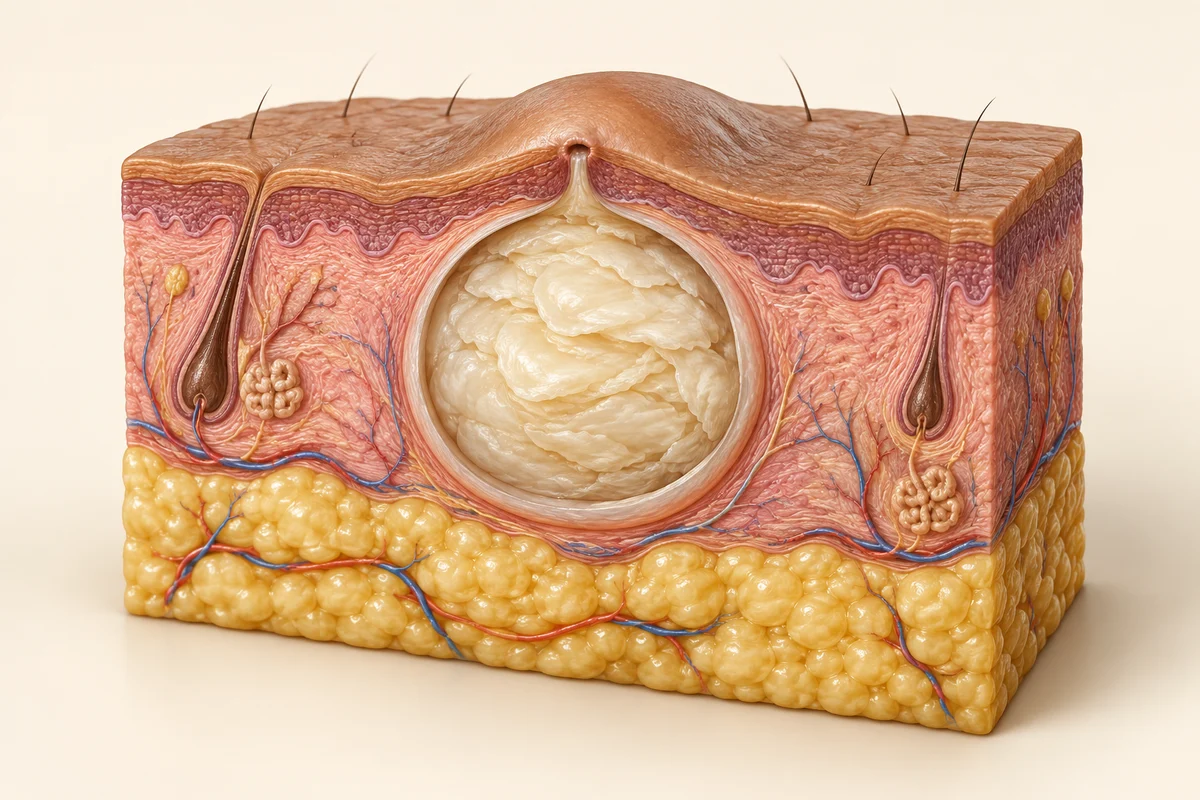
A skin cyst is a sac beneath the skin that may contain keratin or other material. Epidermoid cysts are often called sebaceous cysts. Many are harmless, but the diagnosis should be checked before treatment.
Treat inflammation when needed. Plan removal when it is appropriate.
Symptoms worth discussing
- A rounded lump just under the skin
- A small central opening in some cysts
- Repeated swelling, tenderness, or discharge
- Redness or increasing pain if inflamed or infected
A diagnosis before a decision
Your surgeon examines the lump and asks about how long it has been there, growth, discharge, infection, and previous treatment. An unusual or deep swelling may need additional assessment. This page covers skin cysts, not ovarian, kidney, or other internal cysts.
Bring previous reports, a list of medicines and allergies, and any relevant operation notes. Tell your clinician about blood thinners, diabetes medicines, and previous anaesthetic problems. Do not stop medicines without advice.
Understanding your options
Observation
A small confirmed cyst without symptoms may not need removal. Avoid squeezing or puncturing it at home.
Inflammation or infection treatment
An acutely painful or infected cyst may need treatment first. Depending on the findings, this can include drainage or antibiotics when indicated.
Planned excision
Removing the cyst lining as well as its contents can reduce the chance of the same cyst returning. Definitive removal may be easier once acute inflammation has settled.
What treatment can involve
A small superficial cyst is often removed using local anaesthesia. The surgeon plans an incision, removes the cyst and its wall when appropriate, and closes the wound or leaves a suitable dressing depending on infection. Laboratory examination may be advised.
Your treating team should explain preparation, fasting when needed, anaesthesia, consent, hospital stay, and who will be available if you have concerns after discharge.
Recovery at your pace
Keep the dressing and wound care instructions from your team. Advice on washing, stitches, work, and exercise depends on the site. Seek review if the wound becomes increasingly painful or red, drains pus, or if you develop a fever.
Risks to discuss with your surgeon
- Bleeding, infection, wound opening, or delayed healing
- A visible scar or altered sensation around the site
- Recurrence, especially if the cyst wall cannot be fully removed
- A need for another procedure if infection changes the treatment plan
When to seek urgent care
Seek prompt care for spreading redness, fever, rapidly worsening pain, or feeling unwell. Do not try to drain a swelling yourself.
Costs, insurance, and your location
For treatment in Mumbai or Navi Mumbai, request a written estimate after the clinical assessment. The procedure, hospital, anaesthesia, tests, devices or consumables, and follow-up can affect the total. Ask about exclusions and charges if the plan changes.
Insurance cover and cashless approval depend on your policy, diagnosis, hospital, and insurer. Confirm them directly before committing. No insurance approval or fixed price is implied by this guide.
Frequently asked questions
Can I squeeze a cyst out?
Avoid squeezing or cutting it. This can cause inflammation, infection, and scarring, and may leave the lining behind.
Is drainage the same as removal?
No. Drainage empties contents, often to manage an acute problem. Excision aims to remove the cyst lining as well.
Can an infected cyst be removed immediately?
Sometimes the infection or inflammation needs treatment before planned excision. Your surgeon decides after examining it.
Does a cyst always come back?
No, but recurrence is possible. Ask whether complete removal is appropriate and whether follow-up is needed.
Sources & further reading
Educational information based on the sources below. This guide does not replace a personal clinical assessment.
Written by Nivaya Health Editorial Team. How we prepare our guides.