What you should know
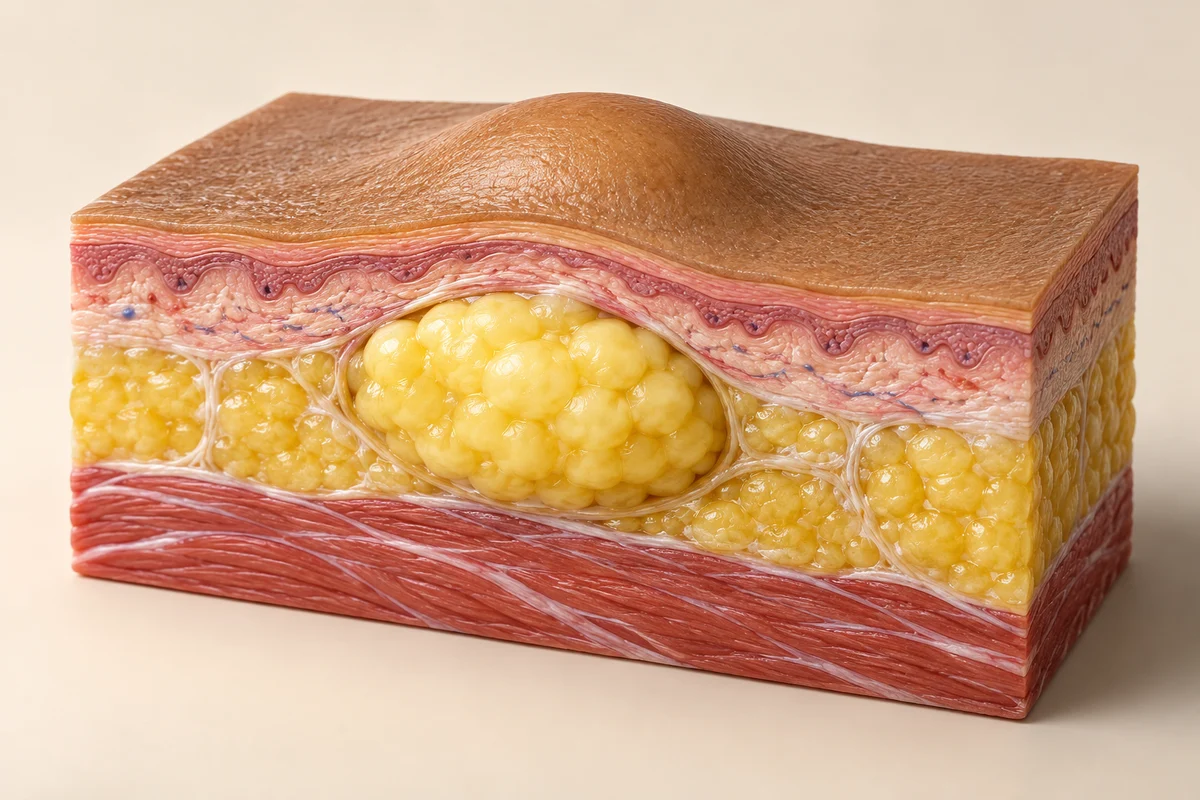
A lipoma is a usually benign growth of fatty tissue beneath the skin. Many do not need treatment. A new, growing, deep, hard, or painful lump should be assessed before calling it a lipoma or planning removal.
Know what the lump is before deciding to remove it.
Symptoms worth discussing
- A soft or rubbery lump beneath the skin
- A lump that moves slightly when touched
- Slow growth, often without pain
- Pressure or discomfort depending on its size and location
A diagnosis before a decision
A surgeon checks the size, depth, mobility, growth, and relation to nearby structures. Imaging or tissue sampling may be advised if the lump is large, deep, unusual, or changing. Not every lump is a lipoma, and suspicious lumps need the appropriate specialist pathway.
Bring previous reports, a list of medicines and allergies, and any relevant operation notes. Tell your clinician about blood thinners, diabetes medicines, and previous anaesthetic problems. Do not stop medicines without advice.
Understanding your options
Observation
A confirmed, stable lipoma that is not causing problems may be monitored. Ask which changes should trigger another assessment.
Surgical removal
Removal can be considered for discomfort, growth, movement restriction, uncertainty, or personal preference. The size and position affect the incision and anaesthesia.
Further investigation first
A fast-growing, deep, fixed, or unusual lump may need imaging and specialist review before any attempt at removal.
What treatment can involve
After an appropriate assessment and consent, the surgeon makes an incision and removes the lump. Local anaesthesia may suit a small superficial lipoma, while larger or deeper lumps may need a different setting. Tissue may be sent for laboratory analysis to confirm the diagnosis.
Your treating team should explain preparation, fasting when needed, anaesthesia, consent, hospital stay, and who will be available if you have concerns after discharge.
Recovery at your pace
Wound care, dressing changes, stitch removal if needed, and activity advice depend on the location and closure. A scar is expected. Ask how to protect the wound at work and whether the pathology result requires a follow-up visit.
Risks to discuss with your surgeon
- Bleeding, infection, bruising, or a fluid collection
- Scarring, altered skin sensation, or a contour change
- Recurrence or development of new lipomas elsewhere
- Injury to nearby nerves or vessels, especially with deeper lumps
When to seek urgent care
Arrange prompt assessment for a rapidly growing, hard, fixed, or deep lump. Redness, fever, severe pain, or concerning wound changes after removal need medical review.
Costs, insurance, and your location
For treatment in Mumbai or Navi Mumbai, request a written estimate after the clinical assessment. The procedure, hospital, anaesthesia, tests, devices or consumables, and follow-up can affect the total. Ask about exclusions and charges if the plan changes.
Insurance cover and cashless approval depend on your policy, diagnosis, hospital, and insurer. Confirm them directly before committing. No insurance approval or fixed price is implied by this guide.
Frequently asked questions
Does every lipoma need removal?
No. Once the diagnosis is clear, a stable lump without symptoms can often be observed.
Can I tell whether a lump is a lipoma at home?
No. Appearance and feel alone cannot reliably identify every lump. A clinician should assess an unexplained lump.
Will there be a scar?
Yes. Surgical removal leaves a scar. Its position and appearance depend on size, location, closure, and individual healing.
Is removal a day-care procedure?
Small superficial lipomas are often removed without an overnight stay. Larger, deeper, or multiple lumps may need a different plan.
Sources & further reading
Educational information based on the sources below. This guide does not replace a personal clinical assessment.
Written by Nivaya Health Editorial Team. How we prepare our guides.