
Give the Lump a Proper Assessment
A soft lump under the skin may have been there for years before it starts bothering you. Perhaps clothing catches on it, it feels uncomfortable during work, or you have noticed it getting bigger. Those are useful details to bring to a consultation.
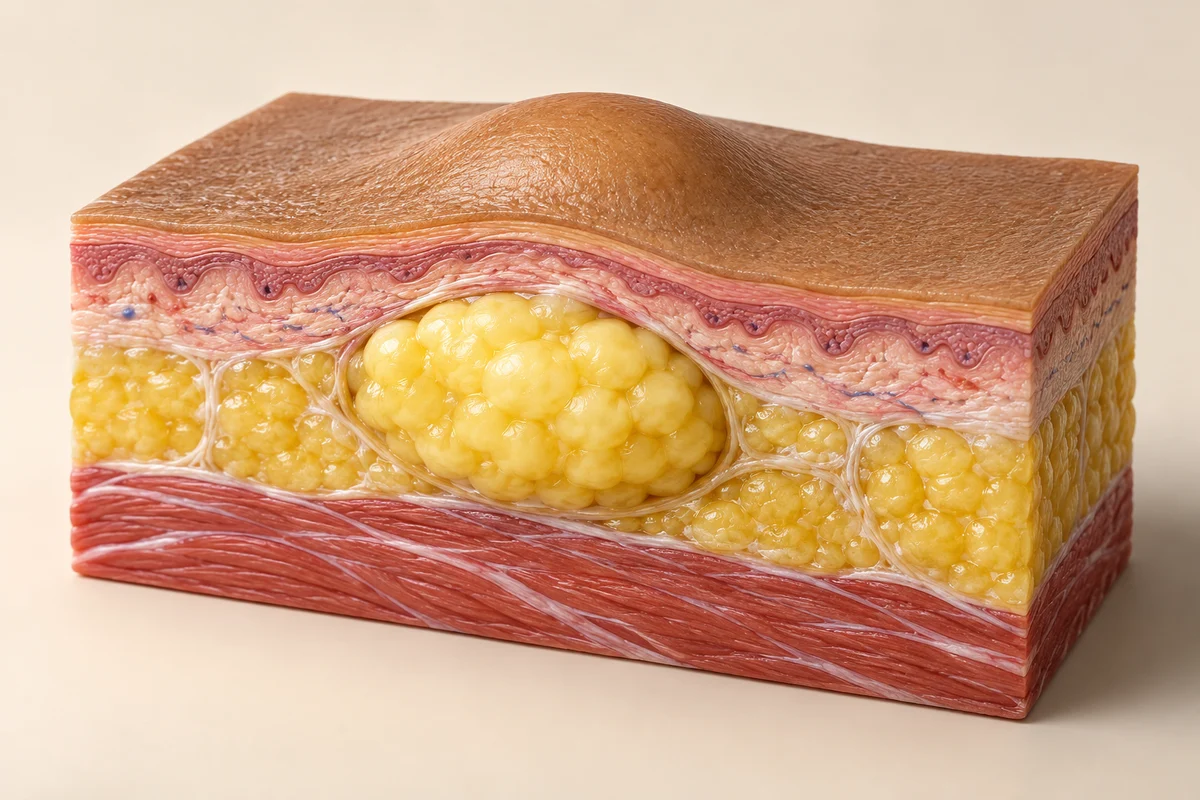
A lipoma is a usually benign growth of fatty tissue. Many are soft, move slightly under the skin, and grow slowly. An unexplained lump should still be examined. Calling something a lipoma from a photograph or a description can miss important differences.
Which Changes Should You Mention?
Think about when you first noticed the lump, how it has changed, and whether there is pain or restriction of movement. Mention earlier removal, other lumps, and any reports or scans. A simple timeline is often more useful than repeatedly pressing it to check.
A rapidly enlarging, hard, fixed, deep, or unusual lump needs prompt clinical assessment. Do not assume that every new swelling is the same as a previous lipoma. If further investigation is advised, ask what the team is trying to establish before considering removal.
Examination and Tests
The assessment considers size, depth, mobility, and the relationship to nearby structures. Some superficial lumps can be assessed clinically. Imaging or a planned tissue investigation may be needed when the findings are uncertain or the lump is large, deep, or changing.
Ask whether removal can be planned safely as a routine procedure or whether a specialist assessment should come first. The setting and sequence matter. A convenient appointment should not take priority over establishing what an unusual lump is.
Observation or Removal?
A confirmed lipoma that is stable and not causing problems may be observed. Ask what changes should bring you back and whether any follow-up is appropriate. Observation is a considered option when the diagnosis and circumstances support it.
Removal may be discussed for discomfort, growth, interference with movement, uncertainty, or personal preference. Explain what you hope removal will improve. It is useful to understand both the benefit you are seeking and the trade-offs, including a scar and wound care.
What Excision Can Involve
The surgeon makes an incision and removes the lump using an approach suited to its location and depth. Local anaesthesia may suit a small superficial lipoma. Larger, deeper, or multiple lumps may require a different anaesthetic or facility.
Ask whether the tissue will be examined in a laboratory, when results are expected, and how you will receive them. Confirm the wound closure, whether stitches need removal, and which costs are included. The appointment for the procedure and the appointment to discuss a result may serve different purposes.
Planning for Healing and a Scar
An operation leaves a scar. The site, size of the lump, closure, and individual healing affect its appearance. Ask where the incision is planned and what aftercare is appropriate rather than relying on a promise of scar-free removal.
Consider the practical demands of the site. A shoulder wound may catch against a bag strap; an arm wound may affect lifting; a back wound may be awkward to dress yourself. Ask about washing, dressing changes, sleeping comfortably, work, exercise, and the first review.
Risks and Problems After Removal
Discuss bleeding, infection, bruising, a fluid collection, changes in sensation, and contour changes. A deeper lump can be close to nerves or vessels. Recurrence or new lipomas elsewhere is also possible.
Increasing redness, discharge, fever, a wound that opens, or severe worsening pain needs review. Use the contact plan given by the treating team. If you are unsure whether a change is expected, ask rather than treating the wound with an unadvised product.
Make the Consultation Specific to You
Useful questions include: how confident is the diagnosis? Are tests needed first? Could I leave it alone? What scar should I expect? Will the specimen be examined? What would a change in the laboratory result mean for follow-up?
For an appointment at our Mumbai clinic, bring any earlier reports and mention if you are travelling from Navi Mumbai. Ask whether an initial assessment, the procedure, dressing care, and results will require separate visits. A clear plan makes those arrangements easier.
Sources & further reading
Educational information based on the sources below. This guide does not replace a personal clinical assessment.
Our editorial process. Educational information, not a personal diagnosis.