
A Skin Lump That Keeps Returning
A small swelling can be easy to ignore until it becomes sore, catches on clothing, or drains. If it settles and then returns, it is worth understanding what is happening before trying another home remedy.
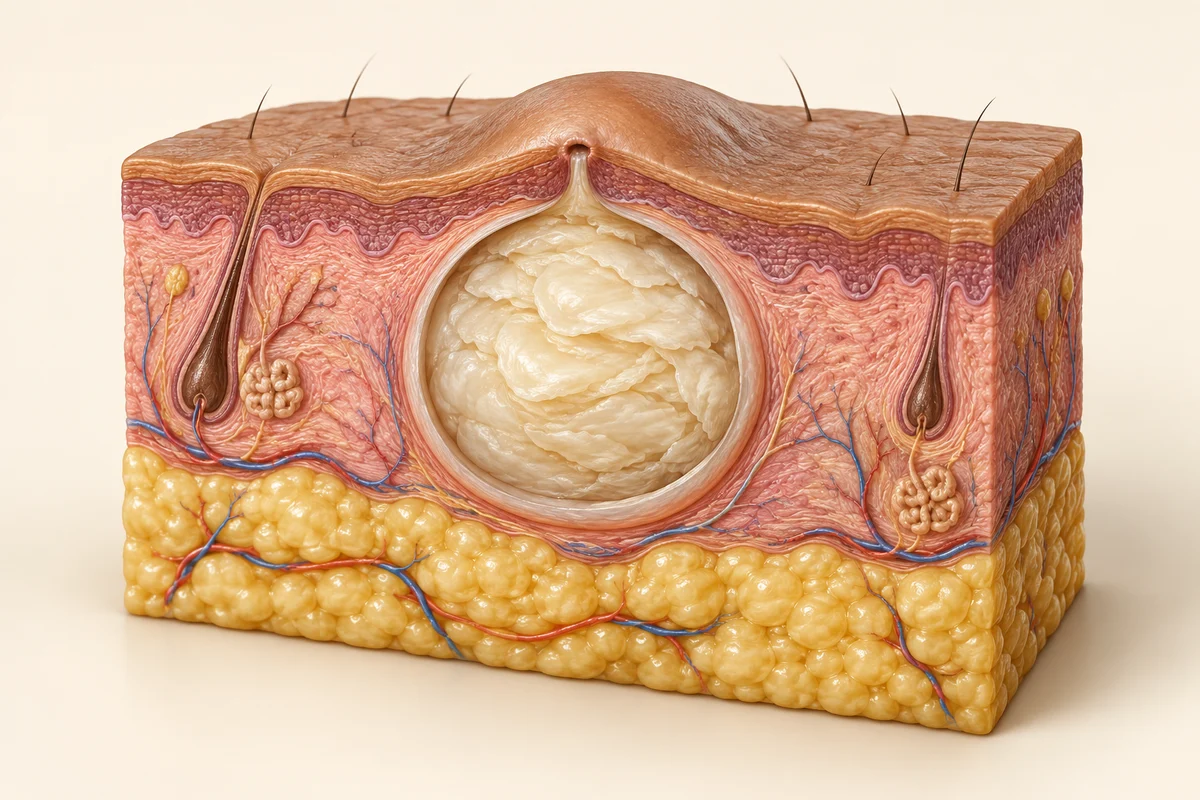
A skin cyst is a sac beneath the surface. An epidermoid cyst contains material such as keratin and is often called a sebaceous cyst. Many are benign, but a clinician should assess an unexplained lump. This guide covers skin cysts rather than cysts in internal organs.
What to Explain at the First Visit
Tell the team how long the lump has been present and whether it has grown, become red, discharged, or been drained before. Mention pain, fever, medicines, and conditions that may affect healing. Bring previous reports if the swelling has already been investigated.
The examination considers the location, size, surface opening when present, and signs of inflammation. If the findings are unusual or the swelling is deep, further assessment may be needed. Ask how confident the diagnosis is before planning a procedure.
Why Squeezing Is Not a Good Solution
Squeezing or puncturing a cyst at home can cause inflammation, infection, or scarring. It may empty some material while leaving the lining behind. A smaller-looking lump after it drains does not necessarily mean the cyst has gone.
If it becomes increasingly red or painful, seek clinical advice. Spreading redness, fever, or feeling unwell needs prompt assessment. Ask how to protect the area while waiting for care and avoid applying products that have not been advised.
Drainage and Excision Have Different Aims
Drainage releases contents and may be part of treating an acutely painful or infected swelling. It does not necessarily remove the whole cyst wall. Further treatment may therefore be discussed after the immediate problem settles.
Excision aims to remove the cyst and its lining when appropriate. Acute inflammation can make that more difficult, so the treating team may recommend addressing inflammation or infection first. Ask what the first procedure is intended to achieve and whether a later planned excision may be needed.
When Observation Is Reasonable
A confirmed small skin cyst without troublesome symptoms may not need removal. You can discuss observation and which changes should trigger another assessment. Your preference matters, alongside the examination findings and the likely consequences of treatment.
If removal is being considered because the cyst catches on a collar, hurts while working, or repeatedly becomes inflamed, explain that clearly. Ask how the procedure is expected to improve the problem and what might remain afterwards.
Preparing for Removal and Wound Care
Small superficial cysts are often treated with local anaesthesia, but the site, size, and infection status affect the plan. Ask whether the wound will be stitched or dressed another way, whether tissue examination is planned, and how results will be shared.
Before the procedure, confirm your medicines and allergies, the expected appointment length, and whether you need assistance afterwards. After treatment, follow the written instructions for washing, dressing changes, work, exercise, and stitch removal when needed. A site you cannot easily see may require help with wound care.
Scars, Recurrence, and Other Risks
Removal leaves a scar. Bleeding, infection, delayed healing, altered sensation, or wound opening can occur. A cyst may recur, especially if its lining cannot be fully removed, and separate new cysts can develop elsewhere.
Increasing pain, spreading redness, pus, fever, or an opening wound needs review. Do not wait until a routine appointment if you are feeling unwell. Ask the team what is expected during healing and keep the contact details available.
Questions That Clarify the Next Step
Ask: is this definitely a skin cyst? Is it inflamed or infected? Is the immediate plan observation, drainage, or excision? Will another procedure be needed? What scar and follow-up should I expect?
For care through our Mumbai clinic, ask how assessment, treatment, dressing care, and any results are arranged. If you are travelling from Navi Mumbai, confirm which visits need to be in person. An itemised estimate should make the intended procedure and any separate stages clear.
Sources & further reading
Educational information based on the sources below. This guide does not replace a personal clinical assessment.
Our editorial process. Educational information, not a personal diagnosis.