
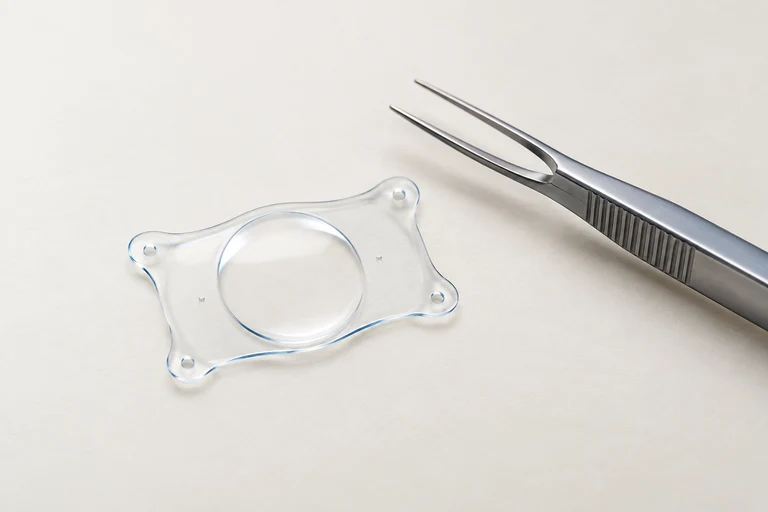
An Additional Lens, Not a Replacement Natural Lens
ICL surgery usually places an implantable collamer lens behind the iris and in front of the eye’s natural lens. That natural lens stays in place. This is an important distinction from cataract surgery, which removes and replaces a cloudy natural lens.
The purpose is to correct a suitable refractive error and reduce dependence on glasses or contact lenses. It is an internal eye operation, so the decision involves different considerations from wearing external correction or reshaping the cornea.
Why a Glasses Prescription Is Not Enough
The eye needs adequate internal space, appropriate measurements, and healthy supporting structures. The examination can include anterior chamber measurements, corneal endothelial cell assessment, pressure checks, and retinal examination.
Lens sizing matters. A toric implant also needs appropriate rotational alignment for astigmatism correction. Ask which findings support the plan, which device is proposed, and whether its eligibility requirements are met in your case.
Not Suitable for LASIK Does Not Automatically Mean ICL
A cornea that is unsuitable for laser correction may lead to a discussion about another option, but it does not settle that choice. Internal eye findings can also make an implant unsuitable. Each assessment needs its own conclusion.
Compare the proposed implant with continuing glasses or contact lenses and any other appropriate procedure. Ask how the benefits you want balance against the risks of operating inside the eye. Your routine and expectations belong in that conversation.
What the Procedure and Early Checks Involve
The folded lens is introduced through a small opening and positioned inside the eye after anaesthesia. The team should explain the plan for each eye, the immediate checks, and the drop schedule.
Early review checks pressure and implant position as well as vision. Arrange transport home and follow activity instructions. Contact the team if the schedule is unclear rather than missing a check because the eye already feels comfortable.
Understand What Removable Really Means
An implant can be removed or exchanged when clinically necessary. That requires another operation. The word removable does not mean that either surgery is without risk or that every effect can be undone.
Discuss infection, pressure changes, cataract, effects on endothelial cells, lens position problems, halos, glare, and residual prescription. Longer-term eye checks remain important even if you see clearly. Ask how often these are expected and who will provide them.
Bring the Right Questions to the Appointment
Ask: is there enough space for the implant? How was its size chosen? What do the endothelial and retinal examinations show? Will I need a toric lens? What would lead to removal or exchange? What checks are needed years later?
For a Mumbai consultation, bring earlier eye records and prescriptions. Patients from Navi Mumbai should plan for early reviews as well as surgery. Ask for an estimate including the device, tests, procedure, medicines, and follow-up. Sudden pain or reduced sight after treatment needs urgent care.
Sources & further reading
Educational information based on the sources below. This guide does not replace a personal clinical assessment.
Our editorial process. Educational information, not a personal diagnosis.