What you should know
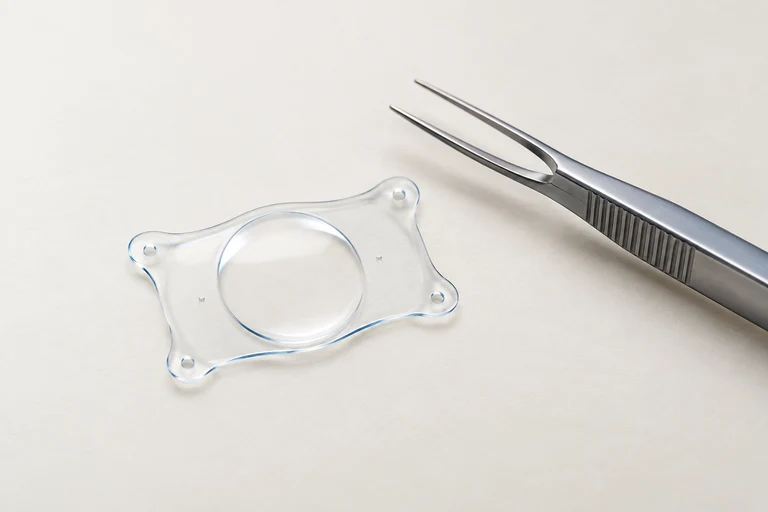
ICL surgery places an implantable collamer lens inside the eye, usually behind the iris and in front of the natural lens. The natural lens remains in place. This differs from cataract surgery, where the natural lens is removed and replaced.
An implantable lens needs careful measurements and continued eye checks.
Symptoms worth discussing
- Short-sightedness, sometimes with astigmatism, needing correction
- A prescription for which an internal lens may be considered
- A wish to explore an alternative when corneal laser treatment is unsuitable
- Contact lens or glasses difficulties that need a balanced options discussion
A diagnosis before a decision
The examination includes prescription stability, anterior chamber measurements, corneal endothelial cell assessment, eye pressure, and retinal health. Lens sizing and adequate space inside the eye matter. Being unsuitable for LASIK does not automatically mean ICL is suitable. Device eligibility and local approval must be checked.
Bring previous reports, a list of medicines and allergies, and any relevant operation notes. Tell your clinician about blood thinners, diabetes medicines, and previous anaesthetic problems. Do not stop medicines without advice.
Understanding your options
Glasses or Contact Lenses
Continuing external correction avoids an intraocular operation and may remain the preferred option.
An Implantable Lens
A phakic lens can correct selected refractive errors without removing corneal tissue or the natural lens.
Other Refractive Surgery
Laser treatment or a different lens approach may be considered for suitable eyes. Compare the risks of an internal operation with the alternatives.
What treatment can involve
After anaesthesia, a small corneal opening allows the folded implant to be introduced and positioned behind the iris. A toric lens also requires appropriate rotational alignment. The team should explain pressure checks, lens position assessment, and the plan for the second eye if relevant.
Your treating team should explain preparation, fasting when needed, anaesthesia, consent, hospital stay, and who will be available if you have concerns after discharge.
Recovery at your pace
Attend early pressure and lens-position checks, use prescribed drops, and avoid rubbing or unapproved activity. Longer-term review remains important for pressure, lens position, cataract, and corneal health. An implant can be removed or exchanged when necessary, but that requires another operation.
Risks to discuss with your surgeon
- Raised eye pressure, inflammation, infection, or bleeding
- Cataract or damage to corneal endothelial cells
- Lens sizing or position problems, including rotation of a toric lens
- Halos, glare, residual prescription, or further surgery
When to seek urgent care
Sudden loss of vision, a new curtain or shadow, flashes with many new floaters, or severe eye pain needs immediate in-person eye care. Do not wait for a WhatsApp reply.
Costs, insurance, and your location
For treatment in Mumbai or Navi Mumbai, request a written estimate after the clinical assessment. The procedure, hospital, anaesthesia, tests, devices or consumables, and follow-up can affect the total. Ask about exclusions and charges if the plan changes.
Insurance cover and cashless approval depend on your policy, diagnosis, hospital, and insurer. Confirm them directly before committing. No insurance approval or fixed price is implied by this guide.
Frequently asked questions
Is ICL the same as cataract surgery?
No. ICL usually leaves the natural lens in place. Cataract surgery removes the cloudy natural lens and replaces it.
Is ICL reversible?
A surgeon can remove or exchange an implant when needed, but this is another intraocular operation and does not erase the risks of either procedure.
Does a thin cornea mean I should choose ICL?
Not automatically. Internal eye measurements, endothelial cells, pressure, retinal health, and device eligibility still need assessment.
Will I need future eye checks?
Yes. Early and longer-term checks are important even when vision is clear and you feel comfortable.
Read More in The Care Guide
Practical questions, preparation, and aftercare for icl surgery.
Read the Detailed GuideSources & further reading
Educational information based on the sources below. This guide does not replace a personal clinical assessment.
Written by Nivaya Health Editorial Team. How we prepare our guides.