
Phaco Is a Technique, Not a Different Eye Condition
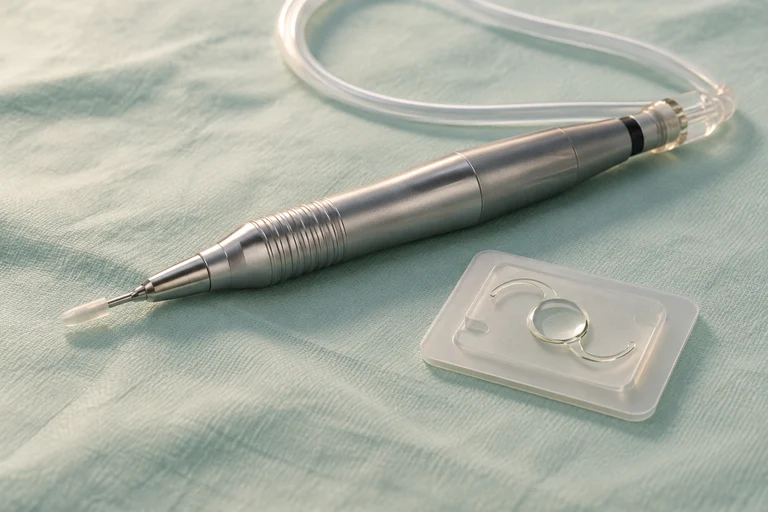
A treatment estimate may say cataract surgery, phaco, or phacoemulsification. These terms are related. Phaco uses ultrasound to break up a cloudy natural lens so it can be removed through a small opening.
The lens is usually replaced with an artificial intraocular lens. Ask the team to separate the removal technique from the replacement lens choice. They are connected decisions, but the word phaco does not tell you which implant is planned.
Check Whether the Cataract Explains the Difficulty
Describe reading problems, glare, night-time difficulty, and the tasks that have become harder. The examination should assess the cataract and also look for other causes of reduced vision, including retinal or optic nerve problems.
Bring reports of previous surgery or laser correction and mention diabetes and regular medicines. The surgeon considers the density of the cataract, corneal health, pupil, and other findings before selecting the most appropriate approach.
Why the Measurements Matter
Biometry helps calculate the power of the artificial lens. Each eye is measured individually. Ask what the plan aims to provide for distance, near tasks, and any astigmatism, and where glasses may still be needed.
Different lens designs have different trade-offs. A more expensive implant does not automatically suit every eye or every visual priority. Explain how you use your vision before agreeing to a lens rather than choosing it only from a package name.
What Happens During Phacoemulsification
After anaesthesia, the surgeon makes a small opening and opens the front of the lens capsule. Ultrasound fragments the cloudy lens and the material is removed. The artificial lens is placed in the retained capsule when possible.
Standard phaco uses ultrasound, not a laser, to break up the lens. Some cataract plans use laser assistance for selected steps, which is a separate detail to confirm. Unexpected findings or complications can require a change of approach.
Small Incision Does Not Mean No Aftercare
Follow the drop schedule, protection, and activity instructions. Vision can change as healing progresses. Ask when to review glasses and when it is safe to wash normally, drive, exercise, travel, or return to work.
Discuss infection, inflammation, capsule problems, corneal or retinal swelling, pressure changes, retinal detachment, and additional treatment. Ask what would happen if the lens could not be placed exactly as planned. Consent should cover those possibilities before the operation.
Make the Estimate and Review Plan Clear
For planned care in Mumbai, ask for an estimate showing the technique, lens, tests, medicines, and follow-up. Clarify any exclusions. Patients coming from Navi Mumbai should allow for review visits and transport rather than planning only the procedure day.
Increasing pain, a new shadow, significant redness, or worsening vision after surgery needs urgent eye assessment. Do not wait for the next routine appointment or an online reply if these symptoms occur. Keep your discharge instructions available if another team needs to see you.
Sources & further reading
Educational information based on the sources below. This guide does not replace a personal clinical assessment.
Our editorial process. Educational information, not a personal diagnosis.