
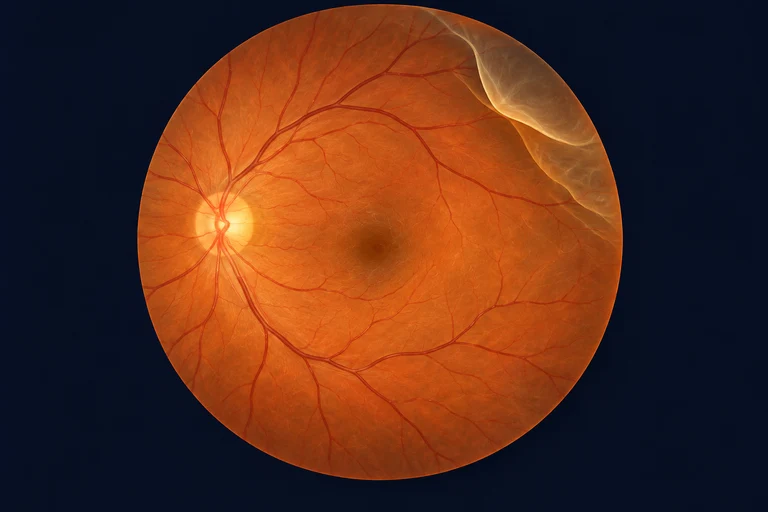
The First Decision Is Getting Assessed
A sudden shower of floaters, flashing lights, or a dark curtain across vision should not be watched at home while waiting for a convenient appointment. Go to an eye emergency service or emergency department. A detached retina can be painless.
These symptoms do not prove a detachment, but they need an examination to exclude a retinal tear or another serious cause. Tell the team when the change began and which eye is affected. Do not wait for an online enquiry response.
What Has Detached?
The retina lines the back of the eye and detects light. When it separates from its normal position, vision is threatened. The location and extent matter, particularly whether the central area responsible for detailed vision is involved.
The specialist usually dilates the pupil to inspect the retina. If bleeding or another opacity blocks the view, an ultrasound may help. Mention earlier eye operations, injury, high short-sightedness, and any previous retinal problem in either eye.
Why One Repair Does Not Suit Every Detachment
A tear found before a larger detachment develops may be treated with laser or freezing in selected circumstances. An established detachment may need a gas-based repair, a scleral buckle supporting the eye from outside, vitrectomy, or a combination.
Ask what the retinal examination shows and why a particular repair is advised. The urgency and operative plan come from those findings. More than one procedure may be needed, and surgery cannot promise restoration of all lost sight.
Ask Whether Gas or Silicone Oil Will Be Used
An internal bubble can help support the retina while treatment takes effect. The surgeon may give specific head-position instructions. Ask the team to demonstrate the position and explain how to manage sleep, meals, and breaks safely.
Flying and high-altitude travel are unsafe with an eye gas bubble until your specialist confirms clearance. Tell any anaesthetist about the bubble before another procedure. If silicone oil is used, ask whether and when a later removal operation is likely.
Recovery Is More Than the Wound Healing
Vision may be blurred during early recovery, and the retinal result takes time to assess. The starting condition, central retinal involvement, and response to repair influence what you eventually see. An attached retina and full visual recovery are different outcomes.
Keep the prescribed drops and retinal follow-ups. Discuss recurrent detachment, scarring, cataract, pressure problems, bleeding, infection, and further surgery before discharge. Ask for help if the positioning or reduced sight makes ordinary daily tasks difficult.
Prepare for the Next Conversation
Useful questions include: is the central retina affected? What repair is planned? Will there be a bubble? What position is needed? When are the first checks? What new symptoms should bring me back immediately? Ask for written instructions and the urgent contact route.
If you are in Mumbai or Navi Mumbai with new retinal warning signs, prioritise immediate in-person care. Routine consultation and cost enquiries can be discussed once the urgent assessment is underway. A new shadow, further loss of sight, or significant postoperative pain needs prompt reassessment.
Sources & further reading
Educational information based on the sources below. This guide does not replace a personal clinical assessment.
Our editorial process. Educational information, not a personal diagnosis.